Chai Stories - Cippenham - Slough

Interior Design Trends London 2026: What Our Clients Are Asking For

Luxury Residential and Commercial Interior Design Insights from London’s Evolving Design Landscape

Interior design in London is constantly evolving, but in 2026 the direction is clearer than ever: clients are prioritising personalisation, longevity, wellness, and meaningful luxury over short-lived trends.

Across luxury residential projects in Mayfair, St John’s Wood, and Central London, as well as commercial hospitality and workplace environments, we are seeing a consistent shift in what clients are asking for.

Rather than chasing fast-changing aesthetics, homeowners, developers, and business owners are investing in interiors that feel timeless, functional, and deeply personal.

At Amit Dixit Design, our work across high-end residential and commercial projects reflects these evolving expectations. From luxury private homes such as Hanover House in St John’s Wood to hospitality environments like Mezwaani Restro Bar and Chor Bazaarr, client priorities are shaping a new definition of modern luxury.

Here are the key interior design trends in London for 2026 based on real client demand

1. Quiet Luxury Is Replacing Statement Opulence

One of the most significant shifts in 2026 is the move away from overly decorative interiors toward quiet luxury.

Clients are increasingly asking for spaces that feel refined rather than loud—where quality is expressed through materials, craftsmanship, and proportion rather than visual excess.

This is particularly evident in luxury residential projects where homeowners want:

  • Subtle material palettes
  • Natural stone and timber finishes
  • Seamless detailing
  • Bespoke joinery
  • Soft, layered lighting

The focus is on interiors that feel expensive without needing to announce it.

In projects like Hanover House, St John’s Wood, this approach translates into calm, cohesive spaces designed for long-term living rather than short-term impact.

2. Bespoke Design Over Catalogue Interiors

A major driver in London’s luxury market is the growing rejection of mass-produced interiors.

Clients now expect:

  • Custom furniture pieces
  • Tailored joinery solutions
  • Bespoke lighting design
  • Unique spatial layouts
  • One-off material combinations

This is especially true in prime London locations such as Mayfair and Kensington, where exclusivity is non-negotiable.

Whether it’s a residential penthouse or a boutique hospitality venue, individuality is now seen as a core marker of luxury.

Even in commercial projects like Mezwaani Restro Bar and Chor Bazaarr, bespoke storytelling through interiors is essential to stand out in a saturated hospitality market

3. Wellness-Led Residential Design

Wellness is no longer a niche request—it is now a central design requirement.

In 2026, luxury homeowners are actively asking for spaces that support physical and mental wellbeing.

Common requests include:

  • Improved natural light strategies
  • Circadian lighting systems
  • Air quality improvements
  • Acoustic control
  • Dedicated wellness rooms
  • Spa-style bathrooms
  • Calm, clutter-free layouts

In projects such as Hanover House, spatial clarity and lighting design play a key role in creating a home that feels restorative rather than purely decorative.

The modern luxury home is now expected to function as a private sanctuary.

4. Hospitality-Inspired Residential Interiors

A growing trend in London residential design is the influence of luxury hospitality aesthetics.

Clients are increasingly inspired by:

  • High-end hotels
  • Private members’ clubs
  • Boutique restaurants
  • Destination bars

This is translating into homes that feel curated, layered, and experiential.

Features often include:

  • Statement lighting installations
  • Rich material layering
  • Bar and entertaining spaces
  • Lounge-style living areas
  • Hotel-inspired bedrooms

Interestingly, this trend works in reverse as well—hospitality clients are requesting residential-level comfort and warmth in commercial spaces, as seen in restaurant projects like Mezwaani Restro Bar.

5. Warm Minimalism Over Cold Minimalism

Minimalism is still relevant, but its interpretation has changed significantly.

In 2026, clients are moving away from cold, monochromatic minimalism toward warm minimalism.

This includes:

  • Soft neutral palettes
  • Textured finishes
  • Natural timber tones
  • Layered lighting schemes
  • Organic materials

The goal is to create simplicity without sterility.

This approach is especially popular in St John’s Wood and Mayfair residential projects where clients want modern interiors that still feel comfortable and inviting.

6. Multi-Functional Living Spaces

Post-pandemic lifestyle changes continue to influence spatial planning in London homes.

Clients now expect homes to support multiple functions within the same footprint:

  • Remote working zones
  • Entertainment spaces
  • Family areas
  • Fitness or wellness zones
  • Flexible guest accommodation

Designers are responding with highly adaptable layouts that allow spaces to transform throughout the day.

In projects like Hanover House, space planning plays a critical role in ensuring that every area serves more than one purpose without compromising elegance.

7. Statement Lighting as Architecture

Lighting is no longer treated as a finishing layer—it is now part of the architecture.

In 2026, clients are asking for lighting that:

  • Defines spatial zones
  • Creates atmosphere
  • Highlights architectural features
  • Acts as sculptural design elements

We are seeing increased demand for:

  • Bespoke chandeliers
  • Integrated LED detailing
  • Wall-washing effects
  • Architectural pendants
  • Layered dimmable systems

Lighting is now one of the most powerful tools in both residential and hospitality design.

8. Sustainability with Luxury Appeal

Sustainability has become a standard expectation rather than an optional extra.

However, in the luxury sector, sustainability must be paired with aesthetics and performance.

Clients are asking for:

  • Responsibly sourced materials
  • Long-life design solutions
  • Energy-efficient systems
  • Durable craftsmanship
  • Low-impact finishes

Importantly, sustainability is no longer about compromise—it is about intelligent design choices that enhance longevity and quality.

9. Commercial Spaces Focused on Experience

In commercial interior design, especially hospitality and retail, the emphasis in 2026 is firmly on experience design.

Restaurants, cafés, and bars are no longer judged purely on interiors but on the full sensory journey.

Projects like Chor Bazaarr and Mezwaani Restro Bar reflect this shift, where interiors are designed to:

  • Create emotional connection
  • Encourage social sharing
  • Improve dwell time
  • Strengthen brand identity

The most successful commercial spaces now behave like immersive environments rather than functional venues.

10. Personalisation at Every Level

The strongest overall trend in 2026 is personalisation.

Clients no longer want interiors that feel generic or formulaic.

Instead, they are asking for:

  • Design narratives tailored to their lifestyle
  • Cultural or personal references embedded in design
  • Bespoke spatial planning
  • Highly curated material palettes

Whether residential or commercial, individuality is now the defining feature of luxury design.

Final Thoughts

Interior design in London in 2026 is being shaped by a clear shift in mindset.

Clients are no longer chasing trends—they are investing in longevity, comfort, identity, and experience.

From luxury residential transformations like Hanover House in St John’s Wood to hospitality environments such as Mezwaani Restro Bar and Chor Bazaar, the demand is consistent: thoughtful, bespoke, and experience-led design.

At Amit Dixit Design, we specialise in creating luxury residential and commercial interiors across London and the UK that respond directly to these evolving expectations. Our focus remains on delivering timeless, highly considered spaces that balance aesthetics, functionality, and emotional impact.

Dunraven Street - Mayfair Living Room Final

Mayfair Interior Design: What Makes It Unique?

Mayfair Interior Design: What Makes It Unique?

Mayfair has long been regarded as London’s most prestigious residential neighbourhood. From elegant Georgian townhouses and luxury apartments to world-renowned hotels and private members’ clubs, the area represents the very best of luxury living in the UK.

But what exactly makes Mayfair interior design different from luxury interiors elsewhere in London?

The answer lies in a unique combination of architectural heritage, craftsmanship, bespoke detailing, and a refined approach to modern luxury. Designing in Mayfair requires more than simply selecting beautiful materials and furniture. It demands a deep understanding of the area’s history, its architecture, and the expectations of discerning homeowners.

At Amit Dixit Design, our work on a private residence on Dunraven Street, Mayfair perfectly illustrates the principles that define exceptional interior design in one of London’s most sought-after postcodes.

Respecting Architectural Heritage

One of the defining characteristics of Mayfair is its extraordinary architectural legacy.

Many properties within the area feature period details that contribute significantly to their character and value. Original cornicing, decorative mouldings, high ceilings, grand proportions, and traditional joinery are all hallmarks of Mayfair’s architectural identity.

Successful luxury interior design in Mayfair is not about erasing history—it is about enhancing it.

For the Dunraven Street residence, the design approach focused on creating a sophisticated contemporary home while respecting the building’s architectural integrity. Carefully considered detailing, balanced proportions, and high-quality materials helped create an interior that feels both timeless and relevant to modern living.

This delicate balance between heritage and contemporary luxury is often what distinguishes Mayfair interiors from projects in newer developments across London.

Understated Luxury Rather Than Excess

Luxury in Mayfair tends to be subtle.

Unlike some international luxury markets where opulence can dominate the design narrative, Mayfair interiors are often characterised by restraint, elegance, and exceptional quality.

The Dunraven Street project reflects this philosophy through its carefully curated palette, bespoke finishes, and attention to detail. Rather than relying on overly decorative elements, the design focuses on craftsmanship, materiality, and spatial harmony.

The result is an environment that feels calm, sophisticated, and enduring—qualities that many high-net-worth clients increasingly prioritise over short-lived trends.

Bespoke Design Is Essential

Every Mayfair property presents unique opportunities and challenges.

No two homes are identical, which is why bespoke design plays such an important role in luxury residential interiors.

In premium London properties, clients expect spaces tailored specifically to their lifestyles. This often includes:

  • Custom-designed joinery
  • Bespoke furniture
  • Integrated storage solutions
  • Tailored lighting schemes
  • Specially sourced materials
  • Architectural detailing unique to the property

At Dunraven Street, bespoke interventions were carefully integrated throughout the project to maximise functionality while maintaining a seamless visual language.

This level of personalisation creates homes that feel unique to their owners rather than following a standard design formula.

The Importance of Space Planning

One of the less visible aspects of luxury interior design is space planning.

Many people associate interior design primarily with aesthetics, but the most successful Mayfair interiors are built upon intelligent layouts that enhance everyday living.

Prime central London properties often require creative solutions to accommodate modern lifestyles within historic building envelopes.

For the Dunraven Street residence, careful consideration was given to circulation, functionality, storage, and the relationship between individual spaces. The goal was to create a home that not only looked beautiful but also worked effortlessly for its occupants.

Great luxury design is often felt before it is noticed.

Material Selection Defines the Experience

Materiality plays a crucial role in Mayfair interior design.

The neighbourhood has long been associated with craftsmanship and quality, which means material choices must meet exceptionally high standards.

Across many luxury Mayfair residences, common features include:

  • Natural stone surfaces
  • Fine timber veneers
  • Bespoke metalwork
  • Hand-finished plaster details
  • Luxury textiles
  • Artisan-made furniture

The Dunraven Street project demonstrates how carefully selected materials can create depth, warmth, and sophistication without overwhelming the architecture.

When combined thoughtfully, these materials contribute to an atmosphere of effortless luxury that remains timeless.

Modern Living Within Historic Buildings

One of the most interesting challenges in Mayfair interior design is integrating modern living requirements into historic properties.

Today’s homeowners expect features such as:

  • Smart home technology
  • Advanced lighting control
  • Climate management systems
  • Home entertainment solutions
  • Enhanced security
  • Wellness-focused environments

The challenge is ensuring that these technologies enhance the experience without disrupting the architectural character of the property.

At Dunraven Street, contemporary comforts were incorporated discreetly, allowing the design to maintain a refined and elegant aesthetic while supporting modern lifestyles.

Why Attention to Detail Matters

Luxury is rarely defined by a single statement piece.

Instead, it emerges through the cumulative effect of hundreds of carefully considered decisions.

This philosophy was central to the Dunraven Street project, where every element—from joinery details and material transitions to lighting integration and furniture placement—was carefully coordinated to create a cohesive interior experience.

These details may not immediately command attention, but they are often what separates exceptional interiors from ordinary ones.

In Mayfair, where expectations are exceptionally high, attention to detail is not optional—it is essential.

What Homeowners Can Learn from Mayfair Design

Even for homeowners outside Mayfair, there are valuable lessons to take from the neighbourhood’s design philosophy.

The most successful luxury interiors tend to share several characteristics:

  • Timeless rather than trend-driven design
  • High-quality materials
  • Bespoke craftsmanship
  • Strong architectural relationships
  • Thoughtful space planning
  • Careful attention to detail
  • A focus on lifestyle and functionality

These principles create homes that remain relevant and enjoyable for many years to come.

Final Thoughts

Mayfair interior design is unique because it exists at the intersection of heritage, craftsmanship, and contemporary luxury. The neighbourhood’s exceptional properties demand a thoughtful approach that respects architectural history while delivering the comfort and sophistication expected by modern homeowners.

Our Dunraven Street project demonstrates how these principles can be brought together to create a residence that feels elegant, personal, and timeless.

At Amit Dixit Design, we specialise in luxury residential and commercial interiors across Mayfair, London, and the UK. Through a combination of bespoke design, architectural sensitivity, and meticulous attention to detail, we create interiors that reflect both the character of the property and the individuality of its owner.

Independent Hotel Show - Amsterdam 2025 View-6

How Much Does Interior Design Cost in London? (2026 Guide)

How Much Does Interior Design Cost in London? (2026 Guide)

Luxury Interior Design Costs for Residential & Commercial Projects Across London and the UK

One of the first questions clients ask when planning a luxury home renovation, penthouse refurbishment, boutique hotel, private members club, or commercial workplace is simple:

“How much does interior design cost in London?”

The answer depends on several factors, including the size of the property, the complexity of the project, the level of bespoke design required, and the experience of the interior design studio you choose.

In London’s prime residential and commercial markets, interior design is rarely viewed as an expense alone. It is an investment in lifestyle, functionality, property value, and long-term quality. Whether you are transforming a Kensington townhouse, a Mayfair apartment, a country estate, or a luxury commercial space, understanding design costs upfront helps you plan realistically and achieve the best results.

In this guide, we break down what luxury interior design costs look like in 2026 and what influences the final investment.

Typical Interior Design Costs in London

London remains the UK’s most competitive and sophisticated design market. As a result, fees tend to be significantly higher than the national average.

For 2026, typical design fees generally fall within the following ranges:

Design Consultation

Initial consultations typically range from:

  • £200 – £750+
  • Depending on the designer’s expertise and project scale

This stage usually includes an assessment of the property, discussion of objectives, budget guidance, and design direction.

Single Room Design

For a professionally designed living room, bedroom, home office, or media room:

  • £3,000 – £10,000+

Luxury spaces featuring bespoke joinery, custom furniture, specialist lighting, and premium materials can exceed this range considerably.

Full Residential Interior Design

For apartments, houses, penthouses, and large family homes:

  • £15,000 – £60,000+
  • Ultra-prime properties often exceed six-figure design fees

These projects commonly include space planning, interior architecture, bespoke furniture design, FF&E specification, procurement, contractor coordination, and installation management.

Luxury Commercial Interior Design

For offices, hospitality venues, wellness facilities, retail environments, and mixed-use developments:

  • £20,000 – £250,000+

Commercial projects require significantly more technical coordination, compliance considerations, branding integration, and stakeholder management, which can increase design fees substantially.

How Interior Designers Charge

Different studios use different fee structures depending on the project type.

Fixed Design Fee

A predetermined fee based on the agreed scope of work.

This is often preferred for residential projects because it provides budget certainty from the outset.

Some luxury interior designers charge:

  • 10% – 20% of the total project value

This approach is common for large-scale residential refurbishments, hospitality projects, and commercial developments.

What Influences Interior Design Costs?

No two projects are identical. Several key factors influence the overall investment required.

Property Size

A five-bedroom family home naturally requires more design development, drawings, specifications, procurement, and site coordination than a one-bedroom apartment.

Level of Bespoke Design

Luxury interior design increasingly focuses on uniqueness.

Custom-designed joinery, handcrafted furniture, artisan finishes, decorative lighting schemes, natural stone, and tailored architectural detailing all increase project complexity and cost.

However, these elements are often what transform a property from simply attractive to truly exceptional.

Listed Buildings and Heritage Properties

Many prime London homes are located within conservation areas or listed buildings.

Properties in areas such as Kensington, Chelsea, Belgravia, Holland Park, and Mayfair frequently require additional planning considerations, specialist consultants, and detailed approvals before works begin. These requirements can affect both timelines and budgets.

Scope of Services

A concept-only design package costs considerably less than a comprehensive turnkey service.

Full-service luxury interior design typically includes:

  • Concept development
  • Space planning
  • Interior architecture
  • Lighting design
  • FF&E specification
  • Bespoke furniture design
  • Procurement
  • Contractor coordination
  • Project management
  • Installation and styling

The more involved the designer becomes, the more value they can bring to the outcome.

Is Hiring a Luxury Interior Designer Worth It?

For high-value properties, the answer is almost always yes.

An experienced interior designer can help avoid costly mistakes, improve space planning, coordinate specialist suppliers, and deliver a cohesive result that enhances both enjoyment and property value. Industry guidance consistently highlights that professional designers save time, reduce decision fatigue, and help clients navigate complex renovations more efficiently.

For commercial spaces, professional design can also influence customer perception, employee wellbeing, operational efficiency, and brand positioning.

In today’s competitive property market, thoughtful design has become a significant differentiator.

Luxury Interior Design Trends Influencing Costs in 2026

The luxury sector continues to evolve.

Current trends include:

  • Bespoke craftsmanship
  • Artisan finishes
  • Wellness-focused interiors
  • Smart home integration
  • Statement lighting
  • Sustainable materials
  • Highly personalised spaces

Rather than minimalist “show homes,” clients increasingly seek homes and commercial environments that reflect individuality, comfort, and long-term quality. This shift is driving demand for custom solutions and specialist craftsmanship.

 While cost is important, choosing solely on price can be a costly mistake.

When selecting an interior design studio, consider:

  • Portfolio quality
  • Relevant project experience
  • Technical expertise
  • Design process
  • Communication style
  • Contractor network
  • Project management capability

The best designers combine creativity with technical knowledge and commercial awareness, ensuring projects run smoothly from concept through completion.

Final Thoughts

Interior design costs in London vary considerably depending on the property, project scope, and level of luxury required. For high-end residential and commercial projects, design fees are typically a small percentage of the overall investment but often have the greatest impact on the final result.

Whether you are planning a luxury apartment renovation, a country residence, a boutique hospitality project, or a premium workplace environment, working with an experienced luxury interior design studio can help maximise both the beauty and value of your investment.

At Amit Dixit Design, we create bespoke luxury interiors across London, the UK, and internationally, delivering refined residential and commercial spaces that combine timeless elegance with exceptional functionality.

Hampstead Heath HouseDining-Room

The Ultimate Guide: Modern vs. Classic Interior Design for London Luxury Homes

In the global capital of design, the dialogue between history and innovation is constant. For the discerning homeowner in London’s most prestigious postcodes—from the stucco-fronted grandiosity of Belgravia to the cutting-edge glass structures of Battersea Power Station—the choice of interior style is more than an aesthetic preference; it is a statement of identity.

At Amit Dixit Design, we understand that a luxury residence must be a sanctuary that reflects the soul of its inhabitant. The debate between Modern vs. Classic interior design is a cornerstone of our practice. As we navigate the trends of 2026, we find that the most successful projects aren’t those that pick a side, but those that master the tension between the two. 

The Pillars of Classic Interior Design: Timeless Grandeur

Classic design is the language of London’s heritage. It is rooted in the principles of the 18th and 19th centuries, drawing heavily from Georgian, Victorian, and Regency influences. For a property in Kensington or Hampstead, embracing the “Classic” means honoring the architectural DNA of the building.

1. Symmetry and Order

The hallmark of classicism is balance. Rooms are often designed around a central focal point—usually a grand marble fireplace or a curated art piece. Symmetrical furniture arrangements create a sense of stability and formal elegance that is inherently calming to the eye.

2. Architectural Integrity

In London’s Grade II listed buildings, the architecture is the art.

 Classic design celebrates:

  • Ornate Plasterwork: Intricate crown moldings, ceiling roses, and wainscoting. 
  • Noble Materials: The use of dark woods like walnut and mahogany, paired with Carrara marble and polished brass.
  • Textural Depth: Heavy silk drapery, damask wallcoverings, and velvet upholstery that offer a multi-sensory experience of luxury. 

3. The Color Palette of the Aristocracy

Classic interiors often lean toward a grounded, sophisticated palette. We utilize “Heritage Tones”—deep navy, hunter green, and burgundy—balanced by warm creams and gold leaf accents to reflect the light of a London afternoon.

The Evolution of Modern Interior Design: The Sophistication of Simplicity

Modern design in the 2026 luxury market has moved far beyond the “cold” minimalism of the early 2000s. Today, it represents a “visual detox”—a way to create breathing room within the high-octane energy of the city.

1. Form Follows Function

In a modern London penthouse, every element must earn its place. The focus is on clean, horizontal lines and an “uncluttered” philosophy. This style prioritizes the volume of the space over the ornamentation of the objects within it.

2. The New Materiality

Modernity in 2026 is defined by tactile minimalism. We move away from the purely synthetic and embrace: 

  • Industrial Refinement: Brushed steel, blackened hardware, and poured resin floors.
  • Organic Textures: Reclaimed light oak, bouclé fabrics, and honed (matte) stone surfaces.
  • ● Light as a Material: Using floor-to-ceiling glazing and smart-glass technology to make the London skyline the primary “wallpaper” of the home. 

3. The "Textured Nude" Palette

Modernity is currently defined by soft, atmospheric neutrals. We utilize shades of “Oatmeal,” “Clay,” and “Mushroom” to create a monochromatic layers that feel expansive and airy.

The 2026 Trend: The "Modern Classic" Fusion

The most sophisticated London luxury interiors today fall into the “Modern Classic” or “Transitional” category. This is where Amit Dixit Design truly excels. We believe that a home should feel like it has been curated over time, not delivered in a single box.

Bridging the Gap: How to Blend Styles

To achieve a harmonious fusion, we follow a specific design logic: 

  • The 80/20 Rule: We typically recommend a 80% dominant style with 20% accent style. For example, a classic Georgian room with original cornicing (80%) brought into the present with a bold, sculptural modern Italian sofa and minimalist lighting (20%).
  • Modernizing the Classic: We take traditional silhouettes—like a Chesterfield sofa—and reupholster them in an unexpected modern fabric like a high-performance matte linen or a vibrant jewel-toned mohair. 
  • Hardware and Accents: 2026 is seeing a massive shift toward Silver Tones. Replacing traditional gold or brass hardware with polished chrome or brushed nickel instantly “cools” a classic room, giving it a contemporary edge.

London-Specific Design Considerations

Designing for the London market requires a deep understanding of local constraints and opportunities. Space Optimization in the City Whether it’s a mews house in Marylebone or a lateral apartment in Knightsbridge, space is the ultimate luxury. 

  • Modern Approach: Use “floating” cabinetry and mirrors to create the illusion of infinite floor space. 
  • Classic Approach: Use bespoke, floor-to-ceiling joinery to maximize vertical storage while maintaining the “library” aesthetic.

Wellness and Technology

Regardless of the aesthetic, a 2026 luxury home must be “intelligent.” At our studio, we integrate:

  • Invisible Tech: Submerged speakers and hidden cinema screens that don’t disrupt the classic molding. 
  • Circadian Lighting: Lighting systems that mimic natural daylight cycles, essential for maintaining well-being during London’s shorter winter days. 

Why Partner with Amit Dixit Design?

Choosing between Modern and Classic can be daunting. Our process removes the guesswork through state-of-the-art Virtual Reality (VR) prototyping. We allow our clients to “walk through” their redesigned space, toggling between classic and modern finishes in real-time before a single contractor is hired. We specialize in Super-prime residential design, ensuring that every project—whether a sleek Mayfair bachelor pad or a sprawling Richmond family estate—is delivered with the precision of high-end architecture and the soul of bespoke artistry.

Key Keywords for London Luxury:

● High-end interior architecture London

● Bespoke furniture commissions

● Grade II listed building renovation

● Luxury property styling Mayfair

● Contemporary London penthouse design

Final Thoughts: Creating Your Legacy

 Ultimately, the choice between Modern and Classic isn’t about what is “in fashion.” It is about how you want to feel when you cross the threshold of your home. Classic design offers a sense of legacy and permanence, while Modern design offers clarity and progress.

At Amit Dixit Design, we step with you into a world of luxury, thoughtfully created for you. Let us help you find the perfect equilibrium for your London residence.

Book Your Private Design Consultation with Amit Dixit

house interior design

The Future of Refined Living: Top Luxury Interior Design Trends in London for 2026

In the heart of London’s most prestigious postcodes—from the historic townhouses of Chelsea to the sleek penthouses of Mayfair—a new era of luxury is unfolding. At Amit Dixit Design, we believe that luxury in 2026 is no longer defined by mere opulence; it is defined by precision, purpose, and personal storytelling.

As we move through 2026, the London design landscape is shifting away from “show-home” perfection toward interiors that feel “lived-in yet curated.” Here are the defining trends shaping the world of high-end London interiors this year. 

Hanover House – St Johns Wood – London TV Lounge View

1. Biophilic Architecture & "The Indoor Forest"

The boundary between the London terrace and the garden is disappearing. In 2026, we are seeing a heightened demand for biophilic design that goes beyond a few potted plants. 

  • Living Walls & Internal Courtyards: Integrating nature into the structural fabric of the home. 
  • Natural Light Engineering: Using advanced light wells and 3D-visualized spatial planning to maximize Vitamin D even on the greyest London afternoons. 
  • Materials: Raw stone, unpolished marble, and light timbers like acacia and bamboo that bring the tactile serenity of the outdoors in. 

2. The Return of "Quiet Sophistication"

While “Quiet Luxury” was the buzzword of previous years, 2026 sees it evolve into Quiet Sophistication. This trend focuses on the “tactile nude”—a palette of oatmeal, blush, and soft clay layered with rich textures. 

  • The Palette: Moving away from cold greys into “Mocha Mousse” and “Rhythm of Blues” (the 2026 colors of the year). 
  • Tactility: Think bouclé cushions paired with mohair throws and bespoke wool rugs. ● Amit’s Take: “A space should be felt before it is seen. We use layered neutrals to create a ‘cave-like’ sanctuary that protects the soul from the hustle of the city.”

3. Sculptural Curves & Organic Flow

Sharp, industrial edges are officially a thing of the past. The 2026 aesthetic is defined by softness and flow, drawing inspiration from the organic silhouettes of the 1970s but refined with modern precision.

  • Curved Architecture: Arched doorways, fluted kitchen islands, and circular staircases that reduce visual “bulk.”
  • Statement Seating: “Fat” armchairs and sofas with architectural edges that serve as functional art.
  • Flow: At Amit Dixit Design, we utilize VR technology to ensure these curves enhance the movement and “Qi” of a room before a single wall is built. 

4. Modern Heritage: The Nostalgic Reclamation

Londoners are increasingly looking to bridge the gap between their property’s history and their modern lifestyle. This trend, known as Modern Heritage, celebrates the “imperfect and handmade.” 

  • Bespoke Joinery: Custom-built libraries and floor-to-ceiling wardrobes that respect original Grade II listed moldings.
  • Curated Contrast: Pairing an antique Regency table with sleek, silver-toned metallic accents like brushed nickel or polished chrome—which are making a massive comeback over brass this year. 
  • Global Artisans: Sourcing one-off pieces from master craftsmen to ensure your home tells a story that cannot be replicated.

5. Wellness-Led "Quiet" Tech

Luxury in 2026 is “smart” but invisible. We are designing homes that actively support the nervous system. 

  • Circadian Lighting: Smart systems that shift color temperature to match your body clock. 
  • Acoustic Luxury: Hidden sound-absorbing panels and “silent” air filtration systems. ● Multi-Functional Zones: Guest rooms that transform into high-end wellness pods or yoga studios at the touch of a button. 
interior design map

From Vision to Reality: Our Comprehensive Design Journey

At Amit Dixit Design London, we believe that true luxury is a journey, not just a destination. Our studio offers a seamless, six-stage process that transforms ambitious visions into breathtaking realities. Whether you are seeking a London interior designer for a private residential design or a global firm for luxury hospitality projects, our structured approach ensures excellence in execution at every turn. Here is an inside look at how we deliver curated luxury interiors and innovative interiors for our discerning private clients across the UK and EU.

Phase 01: Client Discussion – Defining the Core

Every masterpiece begins with a conversation. In this initial stage, we conduct a thorough client discussion to determine requirements and core disciplines. Whether the goal is high-end residential design, commercial fit-out, or hospitality architecture, we align our multidisciplinary design studio resources with your specific needs.

Phase 02: Strategy – The Insight-Driven Foundation

We pride ourselves on an insight-driven approach. This phase involves deep research, creative explorations, and inspiration gathering. We delve into workspace strategy, design strategy, and concept development to ensure the project strikes an emotional chord. By analyzing people, place, and culture, we build a foundation of unexpected relevance and harmony.

Phase 03: The Brand Experience Concept – A 360° Vision

This is the heart of our process. We create a central Brand Experience Concept that radiates through four key pillars: 

  • Spatial: Encompassing master planning, architectural detailing, and interior design.
  • Object: Focusing on product, art, and bespoke furniture design.
  • Service: Designing the guest experience design, service architecture, and exhibitions.
  • Branded: Integrating branding, signage & wayfinding, marketing, and advertising. \

By merging these elements, we ensure that every luxury interior architecture project tells a cohesive story, whether it’s a boutique hospitality design or a bespoke home interior.

house interior design

Phase 04: Technical Feasibility & Economic Viability

A vision is only as strong as its execution. In this stage, our experts analyze the technical feasibility and economic viability of the concept. We provide professional design consultancy and project management to ensure the project is not only beautiful but also achievable and sustainable within the budget.

Phase 05: Development – Cross-Discipline Stewardship

Luxury is found in the details. During development, we engage in cross-discipline design & stewardship and ongoing stakeholder engagement. This stage involves refined materiality and finishes, commercial FF&E design, and meticulous spatial planning. Our team ensures that the tailored interior architecture remains true to the original concept while adhering to the highest standards of craftsmanship and detailing.

Phase 06: Output – Consistent 360° Brand Experience

The final stage is the output, resulting in a consistent 360° brand experience. From turnkey interior design for private client residences to the final signature commercial interiors, we deliver a finished product that lives and breathes. Our project delivery services guarantee that your bespoke residences or high-end commercial spaces are ready for immediate enjoyment or operation.

Why Choose Amit Dixit Design?

Our international interior design portfolio reflects our ability to deliver bespoke interior design with a global perspective. From luxury residential interior projects in London to resort interior design across the EU, we provide tailored homes and commercial projects that stand the test of time. Are you ready to begin your journey? Contact us today to discuss your next residential interior design or commercial interior architecture project and experience the art of timeless interior design.

Hampstead Heath House - London

The Art of Bespoke Living: Excellence in Execution from London to the Global

In the world of high-end design, a beautiful concept is only the beginning. At Amit Dixit Design London, we believe that true luxury lies in the transition from a visionary dream to a physical reality. As a multidisciplinary design studio, we deliver luxury residential interiors, boutique hospitality design, and hospitality architecture across the globe, ensuring that every project resonates with a sense of timeless interior design.

Our philosophy is rooted in an insight-driven approach. We don’t just decorate spaces; we arrive at custom interior solutions that fuse people, place, and culture effortlessly. By striking an emotional chord with our audience, we bring a sense of unexpected relevance and harmony to every private residential design. Whether it is a Grade I listed mansion in Holland Park or a contemporary family home in the Cotswolds, our goal is to create curated luxury interiors that feel both personal and profound.

From Concept to Completion

A signature hallmark of our London interior designer team is the ability to navigate the complex journey of concept to completion design. Once a concept is meticulously crafted, the real challenge begins: making those ideas live and breathe. This is where our commitment to Excellence in Execution sets us apart

We understand that for our discerning private clients, the process must be as seamless as the final result. Our project management and project delivery services are designed to handle the heavy lifting, allowing the creative vision to remain uncompromised. From spatial planning to the final commercial FF&E design selection, we maintain a rigorous standard of craftsmanship and detailing.

A Global Portfolio of Distinction

Our international interior design portfolio showcases a diverse range of luxury residential interior projects and high-end commercial spaces. We bring a global design expertise to every site, ensuring that our bespoke home interiors reflect the unique spirit of their location while maintaining a standard of premium interior design

Our expertise extends beyond the home into the realm of luxury hospitality projects. We specialize in:

● Hotel interior design and resort interior design that redefine the guest experience.
● Restaurant interior design and bar & lounge design where storytelling through design creates unforgettable atmospheres.
● Bespoke commercial interiors that integrate brand experience design with functional spatial design.

Excellence in Execution: The Amit Dixit Standard

● Materiality: Do you lean towards natural stones and timbers, or more avant-garde innovative interiors featuring metals and resins?
● Heirlooms & Art: Identify any existing art pieces or antiques that must be integrated into the curated luxury interiors.
● Lighting Atmosphere: Do you prefer soft ambient glows, dramatic spotlights for art, or a balance of both?
● Texture & Layering: How do you feel about heavy patterns versus tonal, texturedneutrals?

What does “Excellence in Execution” truly mean? It means that our architectural detailing is flawless and our materiality and finishes are sourced with an uncompromising eye for quality. It means providing turnkey interior design services where every light fixture, custom furniture piece, and structural element is part of a cohesive narrative-driven interior. Whether we are working on large scale commercial projects or private client residences, our design consultancy focuses on design strategy and interior architecture. We don’t just provide a service; we provide a signature commercial interior or a tailored home that stands as a testament to commercial design excellence.

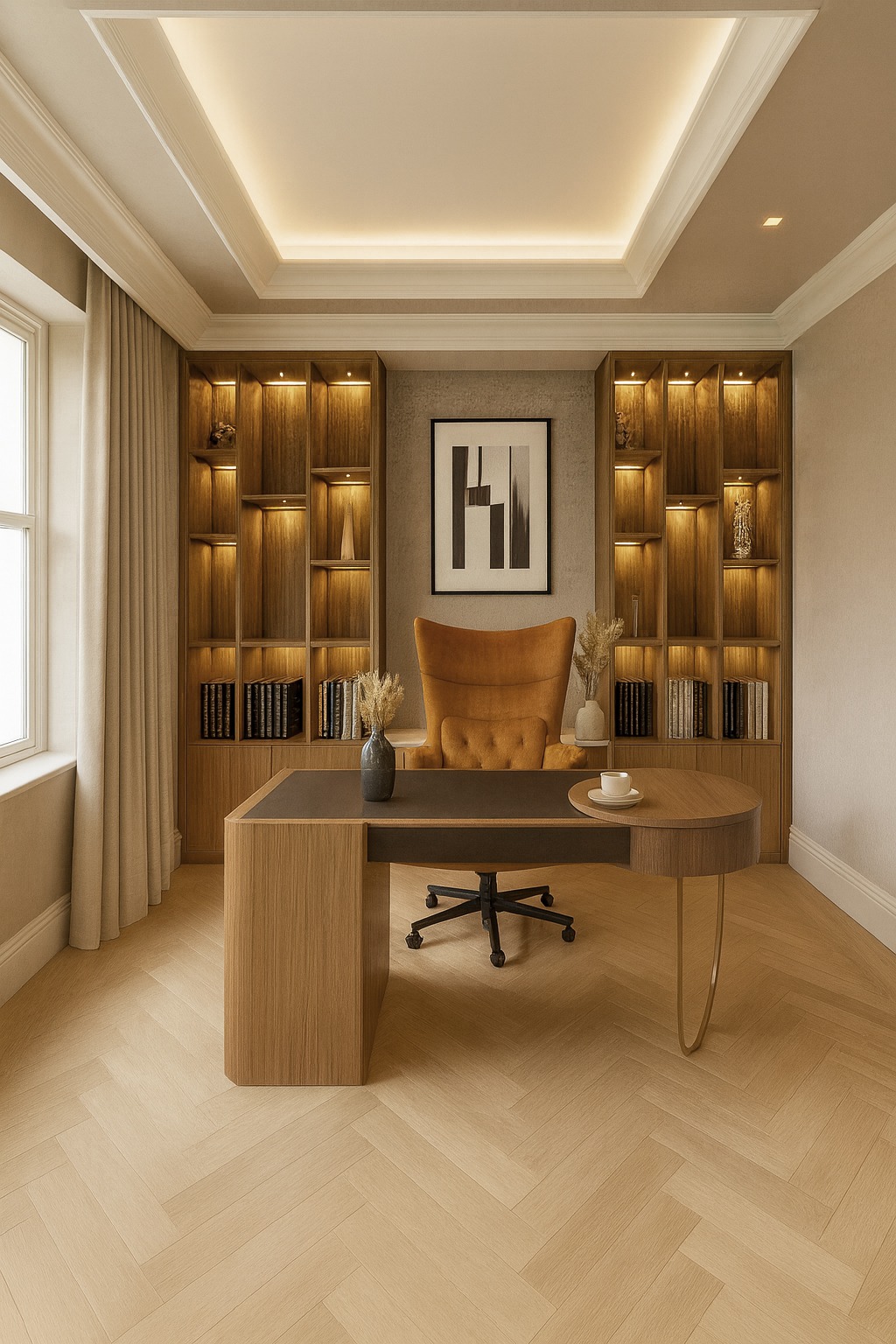
Hampstead Heath House Study - Library Room

Your Vision, Flawlessly Delivered

At Amit Dixit Design, we bridge the gap between imagination and inhabitancy. Our bespoke interior design process ensures that every detail—from the initial concept development to the final commercial fit-out—is handled with precision. We are proud to be an award-winning interior design studio that remains dedicated to the “how” just as much as the “what.”

By choosing a firm that prioritizes high-end residential design and innovative interiors, you are choosing a partner dedicated to making the impossible, tangible. We invite you to experience a world where bespoke residences and destination interiors are crafted specifically for you.

Beaufort Street FF&E

FF&E Checklist guide – Prepare For a Successful FF&E design journey

This checklist is designed to help you, our discerning client, prepare for a successful FF&E design journey. By addressing these points early, you enable Amit Dixit Design London to deliver a project that achieves both commercial design excellence and a deeply personalised interior design experience.

Phase 1: The Vision & Lifestyle (The "Brief")

The Emotional Chord: What is the primary feeling you want the space to evoke? (e.g.,Calm/Serene, Bold/Dramatic, Productive/Energising).
● Lifestyle & Occupancy: Who is using the space? Consider family dynamics, pets, or in aluxury hospitality project, the specific guest demographic.
● Cultural Context: Are there specific cultural influences or local traditions you wish to seefused into the materiality and finishes?
● The “No-Go” List: Clearly define any styles, colours, or materials that are absolutedeal-breakers for you.

Phase 2: Functional Requirements

● Activity Mapping: List the key activities for each room (e.g., large-scale entertaining, quiet reading, high-traffic commercial use).
● Storage Needs: Define what needs to be hidden vs. displayed. This guides our bespoke furniture design and joinery solutions.
● Durability vs. Delicacy: Identify areas requiring high-performance fabrics (stain-resistant, fire-rated) versus areas where delicate silks and velvets are preferred.
● Technology Integration: Note any requirements for integrated AV, smart home systems, or specific lighting scenes.

Phase 3: Aesthetic & Material Preferences

● Materiality: Do you lean towards natural stones and timbers, or more avant-garde innovative interiors featuring metals and resins?
● Heirlooms & Art: Identify any existing art pieces or antiques that must be integrated into the curated luxury interiors.
● Lighting Atmosphere: Do you prefer soft ambient glows, dramatic spotlights for art, or a balance of both?
● Texture & Layering: How do you feel about heavy patterns versus tonal, texturedneutrals?

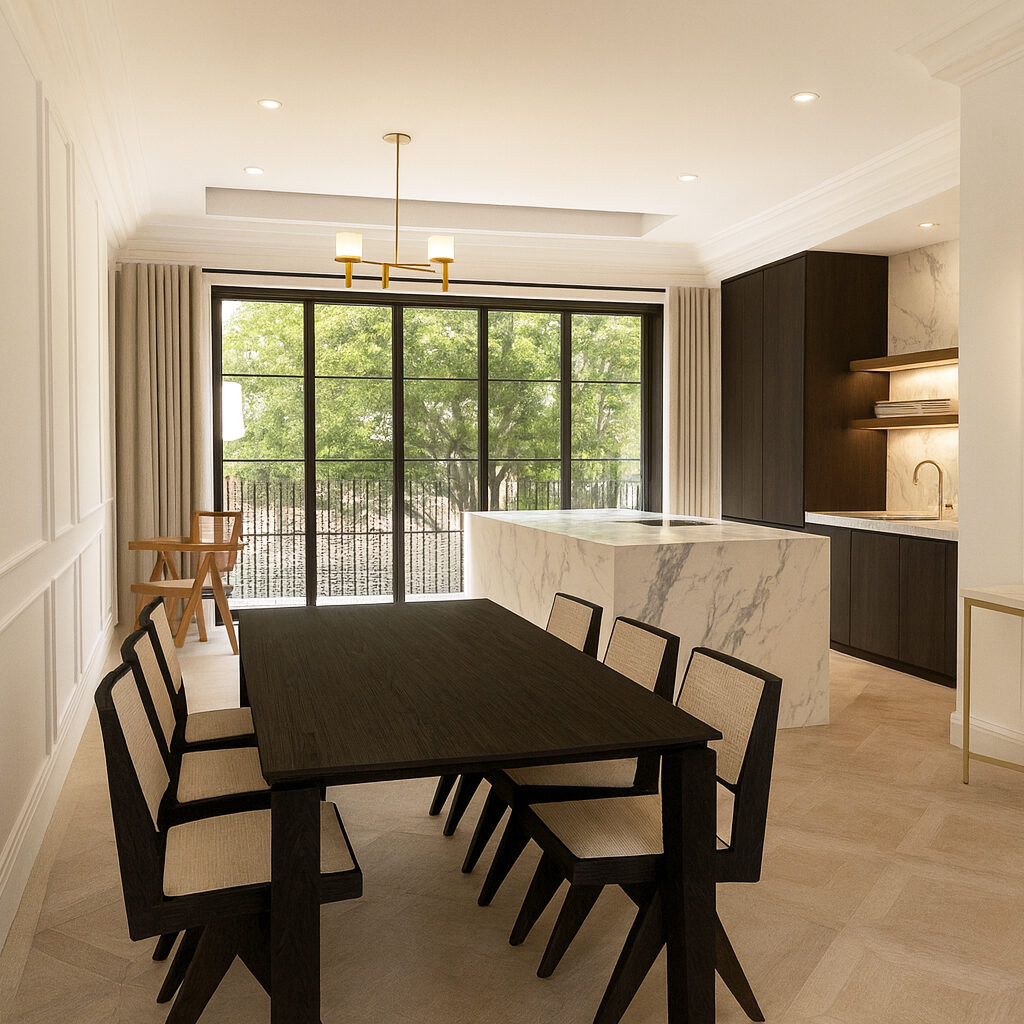
Dunraven Street - Mayfair Dining and Kitchen View

Phase 4: Logistics & Project Stewardship

● Budget Clarity: Provide a ballpark range for the commercial FF&E design and
procurement. This allows for effective value engineering.

● Timeline Milestones: Are there fixed dates for occupancy or a grand opening?

● Stakeholder Roles: Who are the key decision-makers? This ensures our project management remains streamlined.
● Sustainability Goals: Are there specific environmental ratings (like BREEAM or LEED) or”green” material preferences we should prioritize?

Key Elements We Look At (The Professional Lens)

As your design consultancy, we cross-reference your brief against these critical technical elements:

Responsive Table
ElementFocus AreaImpact
Scale & ProportionFurniture dimensions vs. Room volumeEnsures the space feels balanced, not cluttered.
MaterialityTactile quality and light reflectivityCreates the "vibe" and emotional resonance.
ComplianceFire ratings and safety standardsEssential for luxury hospitality and commercial projects.
LogisticsLead times and installation complexityEnsures excellence in execution without delays.